Key Points for Inspecting Loose or Damaged Intercooler Pipe Connections.
2025-12-23
The intercooler is a critical component in the intake system of turbocharged or supercharged engines. Its primary function is to cool the intake air after it has been heated by the compressor, thereby increasing air density and improving engine combustion efficiency and power output. The intercooler is typically connected to the compressor outlet and the engine intake manifold via rubber or silicone piping. Loose or damaged pipe connections are common causes of boost pressure leaks, leading to reduced engine performance, increased fuel consumption, and even illuminated warning lights. This article outlines a systematic approach to inspecting the condition of intercooler pipe connections, helping vehicle owners and technicians quickly identify and prevent such issues.
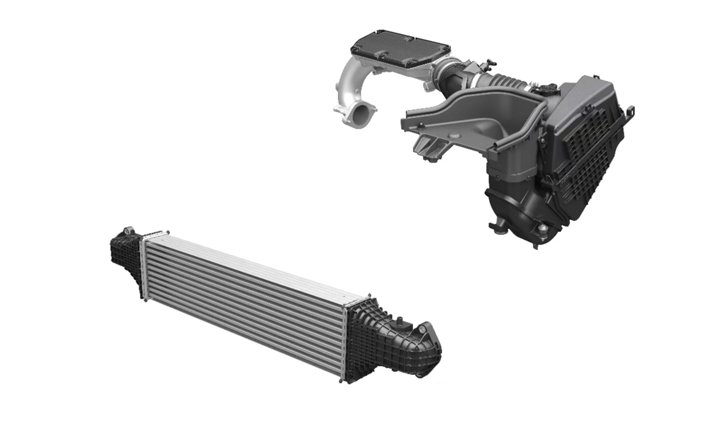
Preliminary Visual Inspection.
This is the most basic and tool-free method.
What to Inspect: Focus on all connection points of the intercooler intake and outlet pipes, including interfaces between the piping and the intercooler, the turbocharger/supercharger, the intake manifold, and any intermediate couplers or joints.
Key Points:
1. Signs of Looseness: Check whether the clamping bands (usually worm-drive clamps or spring clamps) are in their correct position and show no obvious displacement or corrosion. Look for signs of misalignment, pull-out, or gaps between the pipe end and the metal interface.
2. Signs of Damage: Carefully inspect the piping itself, especially at bends, areas near high-temperature heat sources (like exhaust manifolds), and points prone to rubbing or vibration. Look for:
Cracks: Surface cracks, particularly in aged rubber piping.
Bulges: Localized swelling caused by damage to the internal reinforcing layer (carcass) under pressure.
Cuts/Abrasion: Gashes or severe wear marks caused by interference with surrounding components.
Oil Residue Buildup: While some oil vapor condensation inside the pipes is normal, fresh grease, oil sludge, or an abnormal accumulation of dust on the exterior of a connection point is often a telltale sign of a leak, as the escaping oily air attracts dirt.
Tactile and Wiggle Test.
Builds upon the visual inspection through physical contact.
Procedure: With the engine off and cool, attempt to gently twist and wiggle each section of piping by hand. Do not use excessive force.
Assessment Criteria:
A proper connection should feel very secure, with almost no radial or axial play.
If the pipe can be easily rotated by hand, or if significant looseness/gaps are felt at the connection, it indicates insufficient clamp tightness or that the pipe end has become deformed/aged, compromising the seal.
Pressure Test (The Most Professional and Reliable Diagnostic Method).
For suspected minor leaks or precise fault identification,a pressure test is the definitive method.
Principle: Using a dedicated intercooler/intake system pressure testing kit, the system outlet (e.g., at the throttle body) is blocked. Compressed air is introduced at the system inlet (e.g., turbocharger outlet) to pressurize the system to the engine's specified boost pressure level (e.g., 0.8 - 1.5 bar / 12 - 22 psi). The ability of the system to hold pressure is then observed.
Procedure:
Remove a conveniently located section of intake piping and connect the tester's adapter to the system.
Securely block the other end of the system.
Gradually pressurize the system to the target pressure and close the air supply valve.
Let the system sit and monitor the pressure gauge. A steady drop in pressure confirms a leak.
With the system pressurized, spray a soapy water solution over all connections and along the piping. Any leak will produce clearly visible bubbles, allowing for precise location of the fault. This method requires professional tools and knowledge.
Summary
Regularly inspecting intercooler piping is crucial for maintaining the performance of a turbocharged engine. Visual inspection and the tactile wiggle test are two straightforward methods that can reveal most looseness and damage issues. For hidden problems or definitive diagnosis, a professional pressure test is recommended. Ensuring pipe connections are tight and intact is an effective measure to safeguard stable engine power output and prevent unexpected increases in fuel consumption.